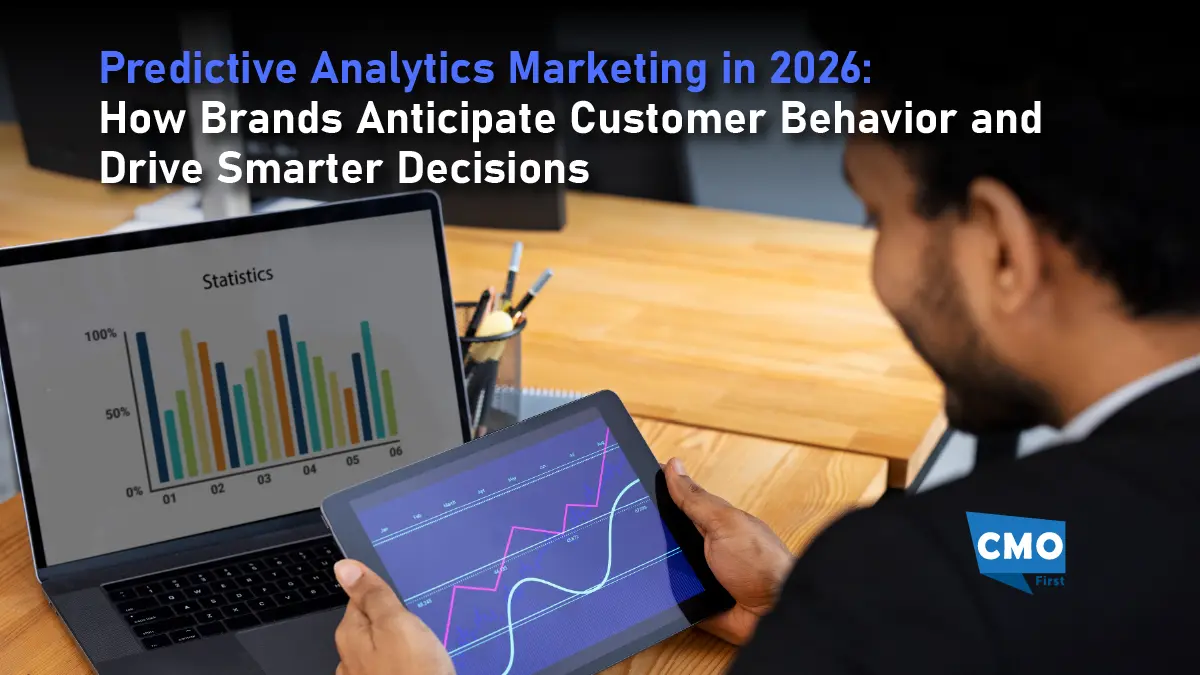
In 2026, reacting to data is a losing game. By the time a dashboard lights up, the moment has already passed. Customers have moved on. Attention has shifted. Budgets have leaked quietly in the background. This is why serious brands are no longer obsessed with reports. They are building foresight engines.
Predictive analytics marketing today is not about looking backward. It is about reading signals early and acting before demand becomes visible. The shift is clear. Brands now use agentic AI systems that learn continuously, process real time data, and trigger decisions without waiting for human prompts.
Predictive analytics in 2026 operates through three core elements which include machine learning, real time behavioral data and autonomous decision systems. The teams shift their focus from discovering past events to predicting future outcomes and making decisions for immediate action.
This shift is also about quality over quantity. The era of big data has given way to right data. Cleaner signals. Intent driven inputs. Context that actually matters.
Adobe’s 2025 AI and Digital Trends Report reinforces this shift. 65 percent of executives say AI and predictive analytics are already driving business growth. That number matters because it reflects reality, not hype. The future has arrived. Many brands are just late to notice.
Also Read: Advertising Technology in 2026: How AdTech Is Reshaping Data-Driven Marketing Performance
The Three Pillars of Predictive Marketing in 2026

Predictive analytics marketing does not work in isolation. In 2026, it rests on three clear pillars. Miss one, and the system collapses.
Hyper Personalization That Feels Timely Not Creepy
Personalization in 2026 looks nothing like first name tokens or generic recommendations. It is about relevance at the right moment. The right offer, before the customer consciously realizes the need.
Predictive models now analyze browsing behavior, purchase cycles, content consumption, and intent signals together. As a result, brands can anticipate what a customer is likely to want next and adjust messaging in real time. This is not guesswork. It is pattern recognition at scale.
More importantly, this form of personalization directly ties to outcomes. According to Adobe’s 2025 AI and Digital Trends Report, 61 percent of executives link personalized experiences to measurable business results. That connection is critical. It moves personalization from a branding exercise to a revenue driver.
When predictive analytics marketing works, customers feel understood rather than targeted. That difference defines trust.
Churn Prevention Through Sentiment Signals
Churn rarely happens overnight. It starts with small signals. A delayed response. A frustrated support interaction. A negative tone in feedback that goes unnoticed.
The predictive systems track micro frustrations without interruption throughout 2026. The system performs analysis on customer service transcripts together with chat logs and reviews and social media mentions. The system develops understanding of risk patterns through continuous learning which identifies dangerous signals and non-threatening patterns.
This allows brands to intervene early. Sometimes with a proactive offer. Sometimes with better support routing. Sometimes by simply fixing a broken experience before it becomes a reason to leave.
Predictive analytics marketing here shifts focus from acquisition obsession to retention intelligence. That shift alone can change profitability.
Dynamic Resource Allocation That Moves with Demand
Static budgets do not survive in a real time world. Predictive models now forecast channel performance before spend is wasted.
Marketing systems in 2026 constantly evaluate predicted ROI across channels. When signals show diminishing returns, budgets move automatically. When momentum builds, spend increases without waiting for weekly reviews.
This is where predictive analytics marketing starts to feel operational, not theoretical. Decisions happen continuously. Human teams guide strategy. Systems handle execution speed. The result is not just efficiency. It is relevance at scale.
Advanced Use Cases How 2026 Brands Actually Win
Theory sounds good. Execution decides winners. The strongest use cases of predictive analytics marketing in 2026 share one trait. They reduce friction between insight and action.
Predictive Lead Scoring That Updates Every Minute
Traditional lead scoring relied on static points. Download a whitepaper. Add five points. Visit pricing. Add ten. It was slow and blind to context.
Predictive Lead Scoring 2.0 works differently. Models calculate propensity to buy in real time. They factor intent signals, engagement velocity, historical patterns, and behavioral similarity to past converters.
As new signals arrive, scores change instantly. Sales teams stop chasing cold leads. Marketing stops guessing readiness.
HubSpot’s AI CRM capabilities reflect this evolution. Their approach to AI powered predictive lead scoring and forecasting directly connects behavioral signals to revenue impact. The outcome is not better scoring. It is better timing.
This is predictive analytics marketing doing what it should do. Reduce waste. Increase precision.
Predictive SEO and GEO in an AI First Search World
Search behavior no longer follows simple keyword trends. AI driven search overviews, conversational queries, and generative results have reshaped discovery.
Predictive analytics now plays a role in anticipating search shifts before they peak. By analyzing content velocity, query intent evolution, and topical momentum, brands can publish ahead of demand.
This matters for both traditional SEO and emerging GEO strategies. Staying visible in AI generated overviews requires foresight, not reaction.
Predictive analytics marketing teams that understand this stop chasing rankings and start shaping narratives early.
Inventory and Demand Forecasting That Saves Marketing Spend
Few things burn marketing budgets faster than promoting products that are about to go out of stock. In 2026, that mistake is avoidable.
Predictive systems now connect marketing forecasts with supply chain data. When demand is predicted to spike, inventory planning adjusts. When shortages appear likely, campaigns throttle automatically.
This alignment reduces wasted spend and protects brand trust. Customers do not see ads for unavailable products. Operations stay in sync with growth.
A Short Case Snapshot That Feels Familiar
Consider a fashion retailer preparing for the next season. Instead of relying on past sales alone, the brand analyzes visual trends, social engagement patterns, and regional demand signals.
Predictive models forecast which styles will gain traction months in advance. Marketing campaigns align with production timelines. Inventory meets demand. Engagement rises.
This is not speculative. Adobe’s Customer Engagement Digital Trends data shows that 56 percent of advanced users already leverage predictive analytics to anticipate customer needs. Even more telling, 87 percent report higher engagement when predictive models guide their decisions.
That combination explains why predictive analytics marketing has moved from experiment to expectation.
The Agentic Evolution from Insight to Execution
The biggest change in 2026 is not better predictions. It is autonomous execution.
Self-Optimizing Campaigns Without Manual Intervention
AI agents now monitor campaigns continuously. They pause underperforming ads. They shift spend. They test variations. All without waiting for approvals.
This does not eliminate human marketers. It removes manual lag. Strategy sets direction. Agents handle execution speed.
Predictive analytics marketing here becomes a living system. Always learning. Always adjusting.
Why Human Judgment Still Matters
Despite automation, human strategy matters more than ever. Brand voice. Ethical boundaries. Long term positioning. These cannot be outsourced to models.
The Human in the Loop approach ensures oversight without slowing momentum. Humans define guardrails. Agents operate within them. This balance prevents short term optimization from damaging long term trust.
Closing the Trust Gap and Getting Data Ethics Right

Power creates responsibility. Predictive analytics marketing must earn trust to work at scale.
Privacy First Prediction That Respects Choice
First party data and zero party data now form the foundation of ethical prediction. Quizzes, surveys, preference centers, and consent driven interactions provide high quality signals without surveillance.
Predictive models trained on volunteered data perform better and feel fairer. Customers understand the value exchange.
Transparency That Builds Confidence
Brands must disclose when AI influences journeys. Not buried in policies. Clearly. Simply.
Transparency reduces fear. It signals respect. In a predictive world, trust becomes a competitive advantage.
An Implementation Roadmap That Actually Works
Many teams fail not because predictive analytics marketing is complex, but because basics are ignored.
Start with Data Hygiene
Dirty data produces confident lies. Clean inputs matter more than complex models. Standardize naming. Remove duplicates. Validate sources. Prediction quality depends on signal quality.
Build Unified Customer Profiles
Break silos between CRM, social, and web behavior. Predictive systems need context, not fragments. Unified profiles turn scattered data into usable insight.
Pilot One Use Case First
Start small. Churn prediction. Lead scoring. Demand forecasting. One use case. One success. Momentum follows proof.
Why the Future Belongs to the Proactive
Predictive analytics marketing in 2026 is no longer optional. It sits at the center of modern marketing stacks. It informs decisions. It protects budgets. It anticipates behavior.
Brands that still rely on reaction will keep chasing outcomes. Brands that invest in foresight will shape them.
The competitive edge does not belong to those who see the future coming. It belongs to those who prepare before it arrives and act before others realize what changed.