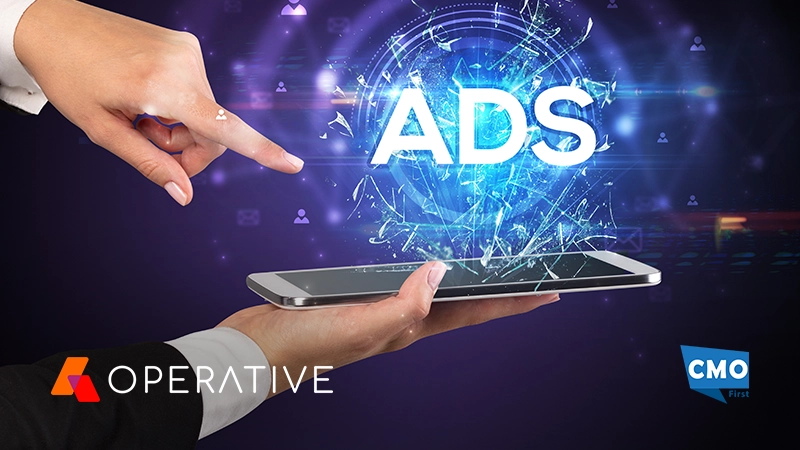
Operative has introduced a fresh AOS (Advertising Operating System) configuration for digital-first monetization to demonstrate the increasing role of digital-first strategies in media and advertising. This product assists media firms in simplifying advertising procedures, integrating their data, and expanding their revenue capabilities in ever-more intricate digital ecosystems.
It is a well-timed release when media companies are finding it hard to deal with advertising scenarios distributed over linear TV, streaming platforms, and various digital channels. Operatives novel AOS configuration intends to solve these problems by offering a unified, smart platform for the handling of ad sales, operations, and analytics in a digitally-oriented world.
A Platform Built for Modern Media Monetization
The AOS configuration offers an extensive array of capabilities that are relevant for the needs of businesses operating in the digital media industry. This includes business intelligence solutions (AOS Insights), CRM integration, and advertising management solutions.
The unification of all the workflows within a single system allows businesses to cover the entire advertising cycle. This ranges from the execution and selling of the inventory to the actual execution.
The major advantage of the system is the unification of direct and programmatic advertising. This allows media businesses to maximize the efficiency of the system. With the current advertising landscape characterized by the use of hybrid advertising approaches, the integration of the two types of advertising is critical.
The solution is built on Operative’s broader AOS architecture, which includes an API-first design, embedded AI capabilities, and modular services that allow companies to scale operations and integrate with existing systems.
This flexible architecture enables businesses to adopt the platform incrementally while maintaining control over their existing technology stack.
Also Read: NIQ Introduces AI-Powered Analytical Capabilities in Ask Arthur to Accelerate Data-Driven Decision Making
Addressing Industry Fragmentation
The launch of AOS digital first configuration is a reflection of a broader challenge facing the industry: ad system fragmentation.
Today’s media companies often have separate ad systems for linear TV, streaming, and digital advertising, which can create inefficiencies and make it difficult to compare results.
Operative’s solution to this problem is to eliminate those inefficiencies through a single source of truth for advertising data and workflows.
Digital advertising is expected to account for the majority of global ad spend in the coming years, making a platform that can unify operations a necessity.
Through analytics, execution, and automation, AOS can help an organization move from a disjointed state to a more cohesive approach.
Implications for the Advertising and Marketing Industry
The introduction of AOS for digital-first monetization has significant implications for the advertising and marketing ecosystem.
Convergence of Linear and Digital Advertising
This launch partly emphasizes one of the significant trends in advertising, which is the merging of linear and digital advertising.
Advertisers are moving to a single campaign that spans different channels due to change in consumer preference to streaming and on-demand content
AOS enables this integration for marketers by allowing them to create, run and measure their advertising across various formats on one single platform.
Increased Reliance on Data and AI
Embedded analytics and AI features of the platform highlight the growing importance of data-driven decision making in marketing.
Using insights provided by AOS, marketers can refine their campaigns continuously, target their ads more accurately, and maximize their returns.
Streamlined Programmatic Advertising
Programmatic advertising still remains a major driver of digital marketing. Through the incorporation of programmatic workflows, Operative is assisting advertisers and publishers in simplifying the handling of their buying and selling of advertising stocks.
Besides that, it would be great to have quicker migrations, more clarity, and higher effectiveness as the end results.
Improved Collaboration Across Ecosystems
The unified platform also facilitates better collaboration between advertisers, agencies, and publishers. With shared data and workflows, stakeholders can align more effectively on campaign objectives and performance metrics.
Broader Impact on Businesses
Beyond the advertising industry, the launch of AOS has implications for businesses across sectors that rely on digital marketing to reach customers.
Better Ways for Monetizing
Tweaking ad spaces and better yield management will be the ways a business could raise more revenue out of the advertisement assets they already have.
Working Down staffs
Getting rid of manual processes by automation and workflow consolidation is what the teams have to work on. That will give the teams more time to think about important things instead of social activities.
Speed of Launching
Through time and campaign management, businesses will be able to spot the trends of the market and also start their campaigns faster.
Business Growth That Can Be Scaled
It is possible to enlarge operations as the profitability continues not only within mainly one but multiple channels and markets through the platforms modular architecture of the business.
The Rise of Intelligent Advertising Platforms
Operatives AOS plan is actually a reflection of the larger change in the direction of intelligent, AI-driven advertising platforms that combine data, automation, and analytics into one system.
Since the advertising ecosystem is becoming more complex, companies will require tools capable of processing huge amounts of data, automating their work procedures, and offering them actionable insights promptly.
The combination of AI with everyday workflows in advertising technology, instead of using it only as a separate analytics layer, is the main change in the design and implementation of advertising technology.
Looking Ahead
The release of AOS to support digital-first monetization is a significant step forward in the development of advertising technology. Resolving issues related to fragmentation, scalability, and data integration, Operative is making a move that will set it ahead in the adtech platform’s next generation.
The advertising and marketing sector will understand the point well: ones that are unified and driven by AI, which can handle advertising lifecycle management across channels, are the future.
As companies continue to put money into digital transformation, AOS-type platforms will be that great ally in, among other things, making operations more efficient, targeting customers better, and obtaining stronger business outcomes while at the same time facing a more competitive market.