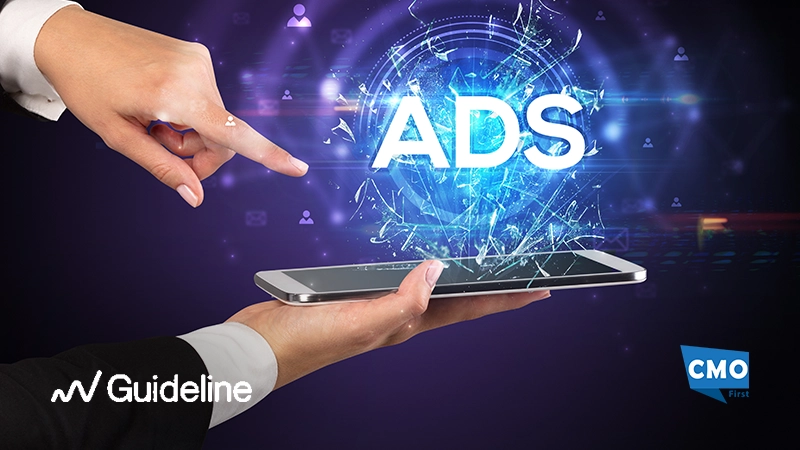
The advertising industry is increasingly using artificial intelligence to efficiently manage complex processes, and the latest announcement by Guideline highlights the potential of AI in transforming the media industry. Guideline has announced the launch of a Media Plan Management MCP Server, a new technology that will allow AI agents to communicate with its media planning and buying platform.
The new solution is built on the Model Context Protocol (MCP), an emerging open standard designed to allow AI agents to interact with external tools and platforms. With this technology, agencies and advertisers can connect their preferred AI systems-whether proprietary tools or popular models—to Guideline’s media plan management software without building complex integrations or custom APIs.
A New Layer of AI Infrastructure for Media Planning
Media planning and buying traditionally have required marketers to work across different tools, requiring them to export spreadsheets, create reports, and analyze results manually. However, with digital campaigns proliferating across channels, markets, and audiences, these siloed processes are now difficult to manage.
Also Read: Sanity Introduces AI Content Operating System, Signaling a New Phase for Marketing and Digital Content Operations
Guideline’s MCP Server aims to solve this problem by creating a standardized bridge between AI agents and media plan data. Once connected, planners and buyers can interact with campaign information using natural language prompts.
For example, marketers could ask an AI agent questions such as:
- How is a campaign performing against its planned budget?
- Which vendors or publishers are delivering the best results?
- How does the plan compare with actual performance metrics?
The AI agent will access and analyze the data retrieved from the media plan management system and provide real-time insights instantaneously. This conversational interface will cut out the steps of navigating the system, running reports, and creating spreadsheets.
According to Vincent Mifsud, CEO of Guideline, the solution is a response to a developing problem as media operations become increasingly complex and organizations increasingly rely on AI to help manage data-intensive operations. By integrating AI agents into the platform, the company is looking to help media organizations streamline operations and allow people to think more strategically, rather than focusing on tasks.
The Rise of Agentic AI in Advertising
This launch is also a part of a larger trend of agentic AI in the advertising and marketing technology space. This is because agentic AI has the ability to perform multi-step tasks independently, such as collecting information, processing it, and executing it across different platforms.
The Model Context Protocol is emerging as a critical layer in these systems, allowing AI agents to communicate with a number of different data sources and software tools. In using this open standard, Guideline is ensuring that its platform will integrate seamlessly with AI systems developed by some of the largest tech companies in the world.
Analysts are predicting a huge growth in the number of systems connected through the MCP protocol as businesses seek to integrate AI agents into their digital infrastructure. Indeed, the potential of AI agents to communicate with other tools and systems could revolutionize the way in which advertising is conducted.
Impact on the Advertising and Marketing Industry
The introduction of AI-native infrastructure for media planning could significantly influence how agencies and brands run their campaigns.
Faster Decision-Making
In the context of media planning, the analysis of vast amounts of information may also involve various mediums, including digital, television, programmatic, and retail. AI-powered conversational interfaces can help users retrieve information instantaneously.
Reduced Operational Complexity
Agencies may also operate across several markets, vendors, and media platforms. Agentic AI systems’ workflow has the potential to reduce the need to manually consolidate and analyze data, which is a time-consuming process in media operations.
Greater Transparency in Media Spending
Since the system is able to instantly analyze the plan-to-actual data, the advertiser will have a better understanding of the budget allocation and the media partners that provide the best ROI.
Improved Collaboration Between Teams
AI agents that connect to centralized media planning platforms allow different teams—strategy, buying, finance, and analytics—to access the same insights quickly, improving coordination across marketing departments.
Implications for Businesses and Brands
Beyond agencies, the broader business impact of AI-driven media planning could be substantial.
Organizations are increasingly using data-driven marketing strategies, which involve different channels and countries. However, these complex systems demand a lot of resources. AI-based planning tools can help reduce the operational costs of managing these systems, as some tasks, like reporting, budgeting, and campaign tracking, can be done automatically.
For marketers, this means they will have more time to think about marketing strategies and engaging with consumers, as the AI-based systems will handle some tasks.
Moreover, AI-based systems could help organizations become more agile in the face of changing markets. Using AI, marketers could get real-time information and react to changes in the market, as they would not have to wait for the results of the marketing campaign.
The Future of AI-Powered Media Operations
MCP Server, a product of Guideline, is a prime example of how advertising infrastructure is developing to accommodate new workflows involving agentic AI. The firm aims to extend MCP connectivity across its broader suite of media planning and data products, solidifying the role of AI throughout the entire campaign process, from planning and budgeting to execution and reconciliation.
As the advertising landscape grows in intricacy, tools that facilitate the connection of agentic AI agents with operational systems could be at the heart of the next big innovation in advertising technology.
The arrival of agentic AI in the world of media planning represents a future where advertising agencies, brands, and technology vendors all understand that AI is not only being used to augment marketing decisions but is, in fact, participating in the operation of marketing.