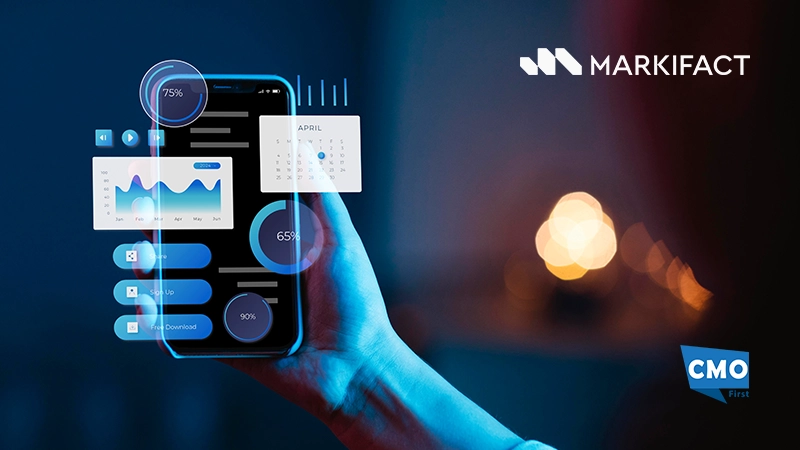
New product release from Markifact sees its Meta Ads MCP platform released into the market. Meta Ads MCP platform is an innovative product that has been created by Markifact to integrate Meta advertising account with the AI assistant, including ChatGPT, Claude, and any other AI agent, using the Model Context Protocol (MCP).
This is part of the trend towards native AI advertising operations, where marketers will be able to do their marketing work in conversational AI interfaces rather than using traditional dashboards and doing things manually. In a development that shows how Meta has embraced native AI advertising, the company is rolling out AI connectors, allowing advertisers to integrate their ad accounts with large language models and AI agents.
According to the launch details, Markifact’s Meta Ads MCP aims to simplify how advertisers interact with Meta’s advertising ecosystem by enabling AI-driven campaign analysis, reporting, optimization recommendations, and workflow automation. The platform is built around the increasingly popular MCP standard, which allows AI models to securely connect with external software systems and business platforms.
The timing of the product launch is highly critical. In the last several months, Meta has ramped up its artificial intelligence advertising plans with the development of official connectors for ChatGPT, Claude, and other similar products that support MCP. The connectors allow advertisers to conduct, monitor, and evaluate ad campaigns in AI ecosystems without needing developer log-ins or APIs.
Also Read: Adthena Launches First ChatGPT Ads Intelligence Platform for Marketers
The platform offered by Markifact seems to take advantage of this progress by serving as a level at which AI-supported ad management can take place. In this case, rather than the marketer using the conventional interface to navigate through dashboards, download reports, or set targeting parameters, all these actions can be performed by an AI agent.
This advancement has significant potential repercussions for the advertising and marketing industry. Over the past few decades, digital marketing has grown increasingly intricate, with marketers having to deal with an immense amount of information about performance metrics, consumer segments, creative testing, budgeting, and analytics across multiple channels. AI advertising agents would simplify this task immensely.
One of the most immediate effects may be the rise of “conversational advertising management.” Marketers may increasingly interact with campaigns by simply asking AI systems questions such as which campaigns are underperforming, where budgets should be reallocated, or which audiences are driving the highest conversions. AI agents connected through MCP infrastructure could instantly generate reports, recommend optimizations, and even execute approved actions automatically.
This is increasingly seen by industry analysts as the future of marketing automation. In contrast to the earlier martech solutions, which mainly centered on workflow automation and actions based on rules, the integration of AI agents provides the ability to reason and analyze campaign performance, making recommendations accordingly.
At the same time, this release demonstrates the growing overlap between ad tech and agentic AI solutions. Previously, businesses used AI mostly for purposes such as content creation and chatbots. The trend now is for AI to be integrated directly into operations related to campaign management, analytics, and media buys.
This could mean a lot for advertising agencies, where hundreds of advertising campaigns can be run simultaneously by an agency through many different customers. This would save time on reports, optimization tracking, and analysis while letting agencies concentrate more on creative and growing business.
SMBs could also gain something from this. In the past, complicated ad optimization was only done by media buying specialists and analytic groups. With AI-enabled ad assistants, the SMBs might have access to the same complicated campaign management that big companies enjoy.
There may also be greater competition within the marketing technology sector due to the rise of AI-native applications. The conventional dashboard-based application for advertisers may find themselves under pressure to incorporate conversational interfaces and other AI functions, including infrastructure that can support MCPs, within their software. Companies expect their software systems to offer not only data analysis but also insight generation and workflow automation.
A further important consideration relates to the future relevance of human marketers. Although an AI agent is capable of carrying out operations, strategy creation, brand story development, and creative content production still require human input. AI solutions are more likely to assist marketers in their work rather than take over their roles completely.
Nevertheless, the deployment of AI-based advertising platforms also raises a number of questions in regard to governance, cybersecurity, and monitoring. Granting direct access to active accounts to AI agents might pose some threats regarding possible unapproved alterations of campaigns, unnecessary overspending, or suboptimal optimization. Numerous specialists in the field have repeatedly advised advertisers to establish certain guardrails for AI advertising agents’ activity and human oversight.
Thus, Markifact’s launch of its own Meta Ads MCP should be viewed in the context of the general trend in the area. Namely, as artificial intelligence grows better at communicating with business platforms, conversations rather than platform management will dominate the marketing operations space.
For businesses operating in advertising, media, and martech, the message is becoming increasingly clear: the future of campaign management may not revolve around dashboards and spreadsheets, but around AI agents capable of understanding goals, interpreting performance data, and executing marketing workflows autonomously.