For a while, the local service industry including contractors, automotive workshops, and healthcare facilities relied on the conventional approach to digital marketing. They purchased very specific local zip codes, placed high bids on keywords with strong purchase intent, and directed users to static landing pages. But, with the digital world becoming overcrowded, local search results were getting more filled up with ads while PPC ad prices increased Much. Several service-oriented small businesses experienced the situation of paying repeatedly high prices for non-specific clicks which only increased their traffic figures on paper but did not produce real, paying customers.
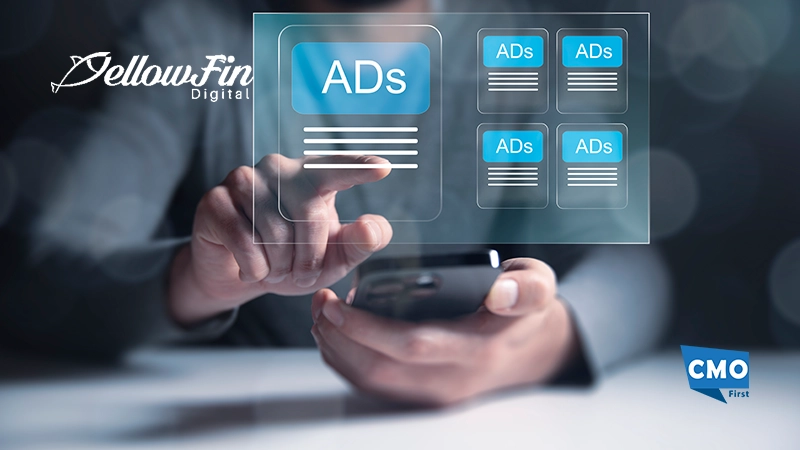
Recognizing this market friction, premier digital marketing company YellowFin Digital announced the nationwide rollout of its enhanced AI-assisted PPC campaign management services. Engineered specifically for localized service providers, this framework blends AI processing power with critical human oversight.
By explicitly treating artificial intelligence as a supportive analytical engine rather than a total replacement for human strategy, the rollout highlights a major shift across the Digital Marketing and Advertising Agency industry. It underscores a transition where agency value is no longer judged by the total automation of ad campaigns, but by how intelligently human operators use AI insights to protect customer capital and drive real business revenue.
Also Read:,Beyond the Currency Debate: How EDO’s Ad EnGage Optimize Alters the Convergent TV Landscape
The Danger of the Automated “Black Box” in Localized Markets
The broader marketing industry has spent the last few years leaning heavily into total algorithmic automation, such as Google’s Performance Max campaigns. While automated “black-box” ad systems excel at analyzing millions of cross-platform data points simultaneously, they frequently misinterpret the hyper-local nuances that dictate real-world consumer behavior for service businesses. An AI engine can easily identify a rising volume of regional searches for “plumbing repair,” but it cannot naturally detect that a specific zip code leans heavily toward emergency water heater replacements over routine maintenance due to a recent localized infrastructure shift.
YellowFin Digital’s framework counters this vulnerability by deploying AI precisely where it functions best: processing vast arrays of information. The company’s enhanced PPC structure utilizes machine learning for several complex tasks:
- AI-assisted keyword trend analysis to uncover hidden, low-cost search opportunities.
- Search intent-based campaign structuring to separate active buyers from casual researchers.
- Geographic targeting refinement and audience behavior analysis to ensure ad spend stays focused on viable local service areas.
“Many PPC campaigns look successful on paper because they generate traffic, but traffic alone does not grow a business,” said Keith Heavilin. “Our approach focuses on attracting the right audience, improving conversion quality, and helping businesses generate leads that actually turn into customers.”
The Macro Impact on the Digital Marketing and Advertising Agency Industry
YellowFin Digital’s hybrid model triggers a series of broad operational adjustments across the digital marketing sector:
1. The Realignment of Agency Value Frameworks
Historically, boutique agencies justified their retainers through manual tasks like writing ad copy, setting manual bids, and pulling monthly performance reports. As specialized AI systems absorb these routine operational tasks, agencies can no longer bill clients based on administrative hours. The modern agency’s value proposition must pivot entirely toward strategic execution, deep Conversion Rate Optimization (CRO), and delivering verifiable, bottom-line financial results.
2. The Mandate for Integrated Post-Click Conversion Strategy
Traditional paid ad campaigns often suffered from a clear disconnect: an agency would generate a click, but if the client’s website was poorly designed, that click went to waste. By natively pairing its AI-driven PPC insights with custom web design and tailored CRO frameworks, YellowFin Digital signals an industry-wide mandate. Modern marketing firms can no longer operate as siloed traffic-drivers. To keep clients from churning, agencies must take complete operational ownership of the end-to-end customer journey, from the initial impression down to the final form submission.
3. The Commoditization of Pure Automation
As self-service AI ad tools become deeply embedded into primary ad networks, any business owner can launch a basic automated campaign with a few clicks. This forces agencies to move away from basic software automation and focus on hyper-customization. The marketing firms that thrive will be those that use AI tools specifically to unearth deep data anomalies, utilizing that intelligence to construct bespoke, creative positioning that automated platforms cannot easily replicate.
Direct Effects on Businesses Operating in This Space
For localized brands, home service providers, and regional enterprises looking to scale their customer acquisition, the business model implications require rapid adaptation:
- Elimination of Wasted Marketing Capital: Service businesses can stop spending money on empty “vanity metrics” like raw impressions or unqualified web clicks. Transitioning to an intent-driven, AI-assisted monitoring structure allows firms to identify and cut underperforming keywords in real-time, instantly redirecting budgets toward the exact search phrases that yield high-value appointments.
- Protection of Local Competitive Position: In highly competitive regional markets where legacy businesses often outspend smaller firms on broad media buys, smaller service companies can use hyper-focused target filtering to compete. Granular geographic and behavioral modeling allows independent providers to show up at the exact top of search results when high-value local prospects are actively seeking immediate assistance.
- Data-Driven Operational Scaling: When lead quality becomes predictable and steady rather than volatile, service companies can scale their internal workforces with confidence. Managing a business becomes vastly easier when owners can accurately forecast monthly service volumes based on clear, contextualized acquisition data, allowing them to purchase inventory, hire staff, and route service vehicles efficiently.
The Bottom Line
The launch of YellowFin Digital’s AI-assisted PPC framework highlights a fundamental truth about the future of digital marketing: the ultimate winner is neither human intuition alone nor raw machine automation, but a balanced integration of both. By using AI as a highly advanced data calculator and leaving strategic, local interpretation to human experts, agencies can deliver highly resilient lead generation engines. For businesses across the marketing and service landscapes, the strategy is clear: organizations that balance automated analytical scale with practical, human-driven market experience will secure predictable growth, while those relying on unmonitored “black-box” systems will continue to see their budgets drained by irrelevant clicks.